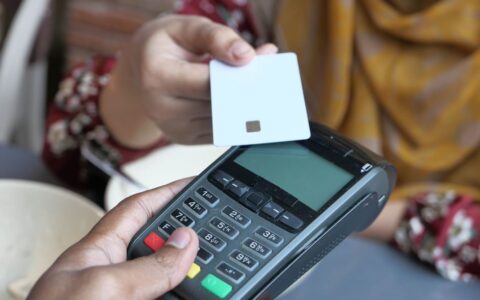


The cash envelope system caps discretionary spending by turning abstract budget categories into physical limits you can feel. Here’s how to run it well in a card-and-cashback world.

How the Cash Envelope System Actually Works
The idea is deliberately low-tech. You decide in advance how much you can spend in a handful of flexible categories, withdraw that amount in cash, and split it into labeled envelopes. When an envelope is empty, spending in that category stops until next month. The physical limit does the enforcement that willpower usually can’t.
What makes it effective isn’t the paper, it’s the friction. Handing over a $20 bill registers as a loss in a way that tapping a card does not, and people tend to spend measurably less when they pay with cash. An envelope with three bills left is a warning you can see and touch on the 22nd of the month, well before a statement ever arrives.
Crucially, the system targets discretionary spending, not fixed bills. Rent, insurance, and loan payments stay on autopay because they don’t respond to impulse. Envelopes are for the categories where a small decision repeated forty times a month quietly drains a paycheck: dining out, groceries, entertainment, clothing, personal care, and the catch-all “miscellaneous.”
Choosing Which Categories Deserve an Envelope
Start by pulling ninety days of transactions and sorting them into two buckets: spending you can’t change this week and spending you can. Only the second bucket earns an envelope. Most households need between four and seven, and beyond that you spend your evenings shuffling small bills instead of controlling anything.
Pick the categories where your money leaks fastest. For many people that’s restaurants and takeout, groceries, and a catch-all “fun” envelope covering movies, bars, hobbies, and spontaneous purchases. A small buffer envelope is worth keeping so that a parking meter or a birthday card doesn’t force you to raid the grocery money.
Be honest about your weak point, and give it the strictest treatment. If online shopping is where you overspend, that envelope should be small and its rule firm: when it’s gone, the cart waits until the first of the month. The point is to make you feel the trade-off before you commit, not after the box shows up on the porch.
Avoid the temptation to envelope everything. Utilities, streaming subscriptions, and your phone bill are predictable and better handled by automatic transfers. Reserve the cash ritual for the spending that genuinely fluctuates with mood, convenience, and impulse, because that is the only spending an envelope can actually restrain.
Setting the Right Amount in Each Envelope
An envelope only works if the number is realistic. Underfund it and you’ll abandon the system in week two; overfund it and it stops constraining anything. Use your ninety-day history to find a true monthly average, then trim it by ten to fifteen percent as your target. That small squeeze is where the behavior change lives.
Match the funding rhythm to your pay schedule. If you’re paid every two weeks, fund envelopes with half the monthly amount on each payday rather than loading a full month at once, since a fat envelope on the 1st invites a spending spree by the 5th. Aligning cash to income also keeps you from borrowing against money that hasn’t arrived.
Decide the end-of-month rule in advance. One approach is to sweep leftover cash into savings, which rewards restraint. Another is to let a category roll over so that a lean month funds a splurge later. Either works, but choose deliberately, because an undefined rule quietly becomes “spend whatever’s left.”
Expect to recalibrate for two or three months. Your first amounts are estimates, and the calendar shifts them: holidays, summer travel, and back-to-school all distort the averages. Treat the early months as measurement, not failure, and adjust the numbers rather than quitting the system.
Reconciling Cash Envelopes With Cards and Cashback
The obvious tension is that cash earns nothing, while a good rewards card returns one to five percent and builds the payment history that shapes your FICO score across Equifax, Experian, and TransUnion. Abandoning cards entirely to control spending can cost you real value and, over time, a thinner credit file.
The fix is a hybrid. Keep the envelopes as your ledger of permission, but let a card do the actual paying. Each time you spend from a category, physically move that cash into a separate “to be paid” envelope or clip. At month’s end, the cash you set aside pays the statement in full, so you capture cashback and rewards without ever carrying a balance or touching your APR.
This only works if you pay the full statement every cycle. Rewards are erased several times over by interest the moment you revolve a balance, and a card charging 22 percent APR turns a two-percent cashback card into a losing trade. The envelope’s job here is simply to guarantee the cash exists before the bill does.
If handling physical bills is impractical, a “digital envelope” version keeps the logic without the paper: mirror each category as a line in a spreadsheet or a sub-account at your bank, and decrement it with every card swipe. You lose the tactile friction but keep the hard stop, which is the part that actually reins in spending.
Troubleshooting the Habits That Break It
The most common failure is the mid-month “loan” from one envelope to another. Borrowing from groceries to finish the entertainment budget feels harmless, but it dissolves the boundaries that make the system work. Treat each envelope as a hard wall, and if a category is chronically short, fix its amount next month rather than raiding a neighbor.
The second failure is forgetting to log card spending in the hybrid version. A swipe you don’t record is a limit you didn’t enforce, and three unlogged purchases can blow a category before you notice at the statement. Build a ten-second habit: move the cash, or update the line, at the register before you pocket the receipt.
Watch for “envelope creep,” the slow drift of expanding categories every month until the system tracks spending without restraining it. If your numbers only ever go up, the envelopes have become a diary, not a budget. Revisit your trimmed targets quarterly and hold them.
Finally, plan for irregular expenses so they don’t ambush a monthly envelope. Car repairs, annual card fees, and holiday gifts belong in a separate sinking fund you feed a little each month, not in the dining or grocery cash. Keeping predictable-but-lumpy costs out of your everyday envelopes is what lets the daily discipline actually hold.